
NEWS News & Trends · Macro Analysis
Energy Crisis 2026: 7 Critical Ways the IMF Warning Will Hit Your Wallet
The IMF just sounded the alarm: global growth cut to 3.1%, inflation back to 4.4%, and a real risk of recession if oil stays above $100/barrel. The energy crisis 2026 isn’t just a Wall Street story — it’s about to show up in your gas tank, your grocery bill, your rent, and your 401(k). Here’s exactly what’s happening and the 7 ways it will hit your wallet.
Growth Slashed
IMF cut 2026 global growth from 3.4% to 3.1%. Worst-case scenario: 2.0% growth — historically associated with major global crises like 2008 and the 2020 pandemic.
Oil Above $100
Brent crude at $96. IMF’s adverse scenario projects $110/barrel in 2026, $125 in 2027. US gasoline already up 17% since the conflict began.
No Subsidy Bailout
IMF is explicitly warning governments NOT to offer broad fuel subsidies. That means no relief at the pump from Washington — you’ll absorb the full price shock.
1. What the IMF Actually Said (And Why It Matters)
On April 14-15, 2026, at the Spring Meetings in Washington, the International Monetary Fund did something it rarely does in such direct terms: it warned that the global economy is drifting toward an “adverse scenario,” with the Middle East war’s energy shock potentially pushing the world to the brink of recession.
The headline numbers from the IMF’s latest World Economic Outlook and Fiscal Monitor reports are sobering. Global growth for 2026 was cut from a previously expected 3.4% down to 3.1%. Inflation is now forecast at 4.4%, well above the 2% target most central banks anchor to. Global government debt has hit 93.9% of GDP — the highest level since the aftermath of World War II.
But the most striking move came from Rodrigo Valdes, the IMF’s new fiscal affairs chief, who explicitly told governments to stop trying to shield consumers from rising fuel prices through subsidies. As he told Reuters:
“We don’t have oil. We don’t have energy. Energy needs to be more expensive for everybody, so that the adjustment happens and we consume less.”
— Rodrigo Valdes, IMF Director of Fiscal Affairs (April 15, 2026)Translation: the world is short on energy because of the conflict, and trying to artificially lower prices through government spending will just make things worse for everyone. Higher prices have to do their job of forcing demand to adjust.
2. The Three Scenarios: Best, Worse, and Severe
The IMF didn’t give one forecast — it gave three. This is unusual, and it tells you how much uncertainty surrounds the energy outlook. Here’s the breakdown:
| Scenario | 2026 Oil Avg | 2027 Oil Avg | 2026 GDP Growth | 2026 Inflation |
|---|---|---|---|---|
| Reference (best case) | $82/bbl | — | 3.1% | 4.4% |
| Adverse (middle path) | ~$100/bbl | $75/bbl | 2.5% | 5.4% |
| Severe (worst case) | $110/bbl | $125/bbl | 2.0% | 6%+ |
Here’s the kicker: just minutes after releasing the optimistic “reference” outlook, IMF chief economist Pierre-Olivier Gourinchas told reporters it may already be outdated. With continued energy disruptions and no clear path to ending the conflict, he said the “adverse scenario” looks increasingly likely. That’s the scenario where multiple countries enter outright recessions and inflation jumps back above 5%.
The severe scenario — global growth at 2% — has historically only happened during major global crises like the 2008 financial crisis and the 2020 pandemic. The IMF isn’t predicting it, but the fact that they put it on the table at all is a signal worth taking seriously.
3. Why the IMF Is Saying “No Bailout at the Pump”
This is where the IMF’s message gets politically uncomfortable. When gas hits $4 or $5 a gallon, voters demand action. Politicians naturally want to cap prices, suspend gas taxes, or send out checks. The IMF is essentially saying: resist that urge.
Their reasoning is threefold. First, broad subsidies mask the real price signal. If gas “feels” cheaper than it is, people don’t change their behavior, demand stays high, and global oil prices climb even further — making the original problem worse for everyone, especially poorer countries that can’t afford to subsidize.
Second, governments can’t afford it. With global debt at 93.9% of GDP and US interest payments alone consuming nearly 3% of GDP — up from 2% just four years ago — adding 2-3% of GDP in new energy subsidies (the scale of past interventions) would seriously strain fiscal frameworks already under stress.
Third, broad subsidies are inefficient. They give the same per-gallon discount to a wealthy SUV owner as to a struggling commuter. The IMF instead recommends targeted, temporary cash transfers for the most vulnerable households, while letting the price signal work for everyone else.
What this means for you, practically: don’t expect Washington to cushion this energy shock. If gas prices spike further this summer, you’ll be paying full freight. For tips on managing rising household costs, see our guide on budgeting basics for young adults.
4. 7 Ways the Energy Crisis 2026 Will Hit Your Wallet
Hit #1: Higher Gas Prices — Already Here
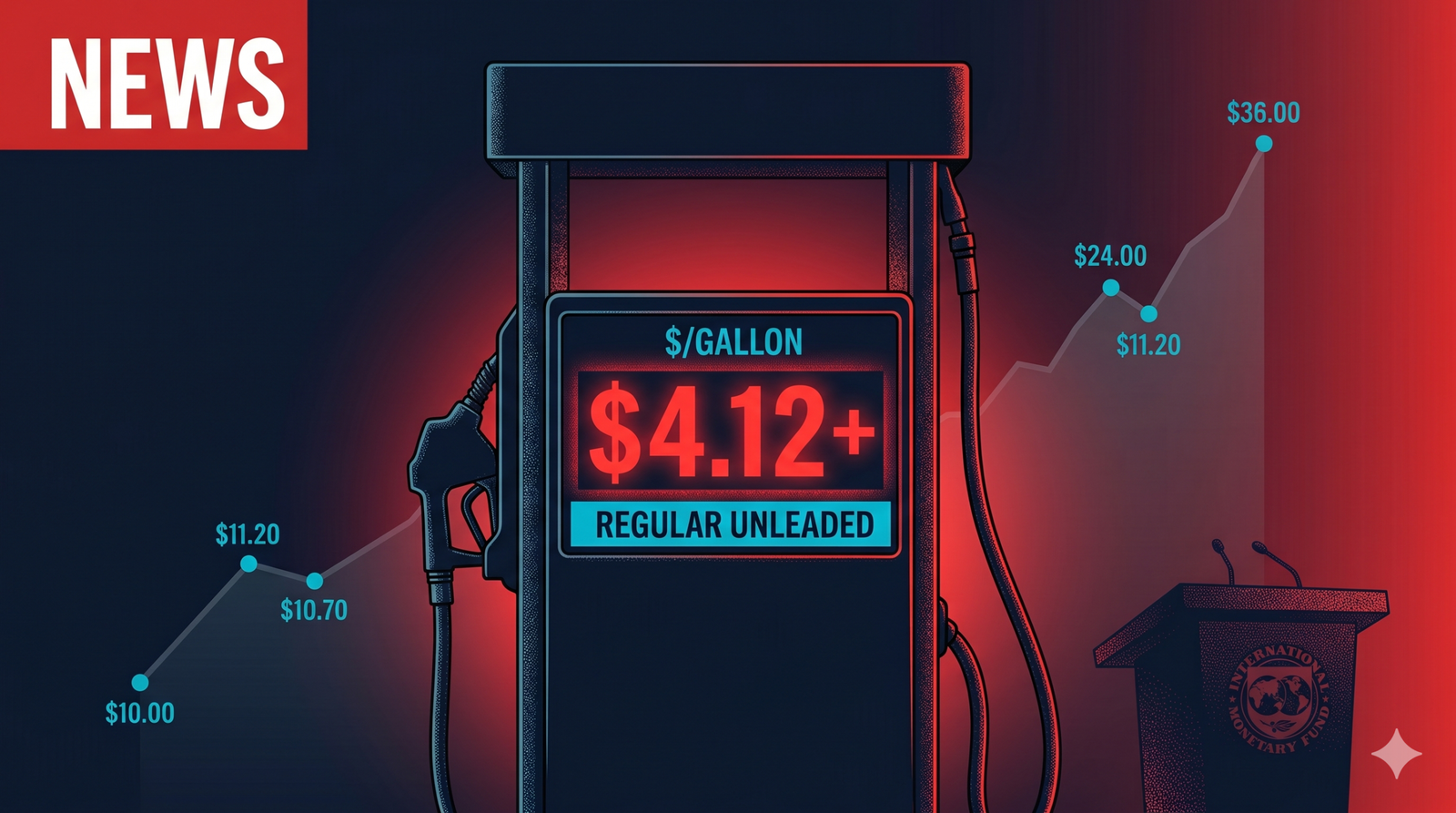
US gasoline has already risen approximately 17% since the conflict began, with the national average now around $4.12/gallon. If oil moves to the IMF’s “severe” $110/barrel scenario, expect gas to push toward $5+ in many regions. For a typical American driving 13,500 miles annually in a 25 MPG vehicle, that’s roughly $700 of additional annual spending.
Hit #2: Grocery Bills Will Climb
Energy is embedded in everything you eat. Diesel powers food trucks, fertilizer is petroleum-based, and refrigeration runs on electricity. The IMF noted that energy shocks classically lift production costs across transport, food, chemicals, and manufacturing. Expect grocery inflation to outpace headline CPI through Q3 2026.
Hit #3: Rent and Housing Costs Get Stickier
Higher inflation means the Fed is unlikely to cut rates aggressively this year. Mortgage rates will stay elevated, which keeps housing inventory tight and rent prices firm. If you’re considering buying in 2026, the affordability math just got harder.
Hit #4: Your 401(k) Faces Volatility
The IMF flagged “abrupt shifts in markets, including in AI stocks” as a key risk that could tighten financial conditions quickly. The S&P 500 is already roughly 10% below its January 2026 high. Don’t panic-sell, but don’t be surprised by another 5-10% drawdown if the conflict escalates.
Hit #5: Travel Costs Spike
Airline tickets respond directly to jet fuel costs, which track crude oil. Summer 2026 leisure travel is likely to be 15-25% more expensive than last year. If you’re planning a trip, locking in tickets early is more important than usual.
Hit #6: Fed Rate Cuts Get Pushed Out
Many people refinancing or shopping for car loans were betting on 2026 rate cuts. Gourinchas warned that if inflation expectations un-anchor, central banks will need to “step on the brakes” — meaning rates stay higher for longer. Don’t plan around rate cuts that may not arrive.
Hit #7: Emerging Market Investments Take a Hit
If you have international exposure in your portfolio (and most diversified investors do), emerging markets are particularly vulnerable to energy shocks. The IMF specifically called out fiscal strain on developing economies. India is the rare bright spot, with growth still projected at 6.5% — but most other emerging markets face headwinds.
5. Interactive Energy Cost Impact Calculator
How much will rising oil prices actually cost your household? Adjust the sliders to model your annual energy expense impact under each IMF scenario. The math here uses a simplified pass-through model: roughly $0.025 in retail gas prices per $1 movement in crude oil.
Estimated New Gas Price
Pass-through from oil to retail
—
Annual Gas Spending
Total at projected price
—
Extra Annual Cost vs. Baseline
The hit to your wallet
—
6. Your Practical Action Plan for the Next 90 Days
The energy crisis 2026 isn’t going away in a week. Here’s a practical action checklist for young American households over the next quarter:
- 1. Build or top up your emergency fund. If oil moves to the severe scenario, you want 3-6 months of expenses in a high-yield savings account before any income disruption hits.
- 2. Review your transportation costs. If you can carpool, work from home an extra day, or consolidate errands, the savings compound at higher gas prices. Don’t make impulsive vehicle changes — but small behavioral shifts add up.
- 3. Don’t panic-sell your investments. Markets typically recover from geopolitical shocks within 3-6 months historically. Selling into a drawdown locks in losses. If you’re young and dollar-cost averaging into index funds, keep going.
- 4. Lock in big purchases that depend on rates. If you’re refinancing or buying a car, don’t wait for rate cuts that may not arrive in 2026. Make decisions based on current rates, not hoped-for ones.
- 5. Stress-test your monthly budget. Run the numbers assuming groceries are 8% higher, gas is 25% higher, and travel is 20% higher. If your budget breaks under that scenario, fix it before the bills arrive.
- 6. Avoid taking on new high-interest debt. Credit card balances are the worst place to absorb an energy shock. If you have to spend more on essentials, cover it from savings or budget cuts — not credit.
- 7. Stay informed but don’t doom-scroll. The IMF presented three scenarios for a reason. The future isn’t predetermined. Track real data (oil prices, CPI prints, Fed statements), not Twitter panic.
The IMF’s message wasn’t “the world is ending.” It was: this is a moment that requires real adjustments, both from policymakers and from households. The young workers who navigate it best will be the ones who treat it as a planning exercise, not an emotional event.
For more on building financial resilience, read our guides on emergency fund strategies and index fund investing for beginners.